 Nitido
How to Do a Color Analysis at Home
Short answer
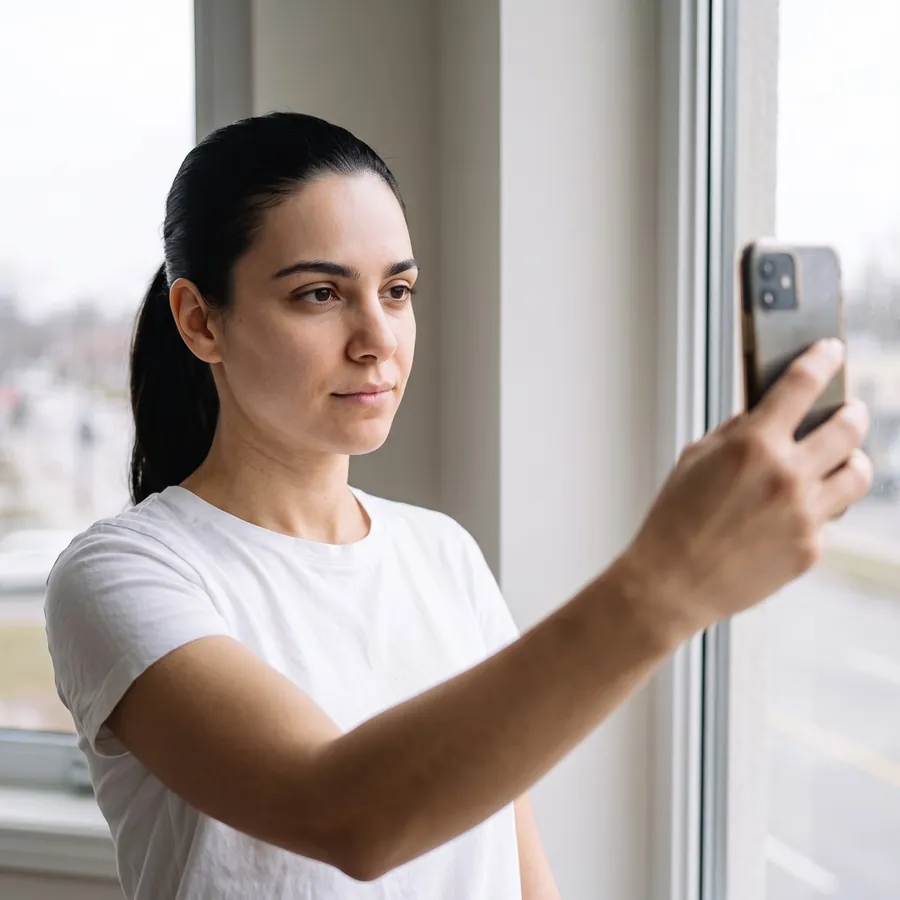
Yes, you can do a color analysis at home. Stand at a window in daylight with a bare face, hair pulled back and a white top, then hold colored fabrics under your chin and compare what they do to your skin. The colors that make you look rested and even are yours; the ones that bring out shadows or redness are not. A measurement from a selfie can do the comparing for you.
In this guide
What you need
- A window with indirect daylight, ideally around midday. No direct sun on your face.
- A mirror, or your phone's front camera.
- A white or light grey top, and something to cover your hair if it is dyed.
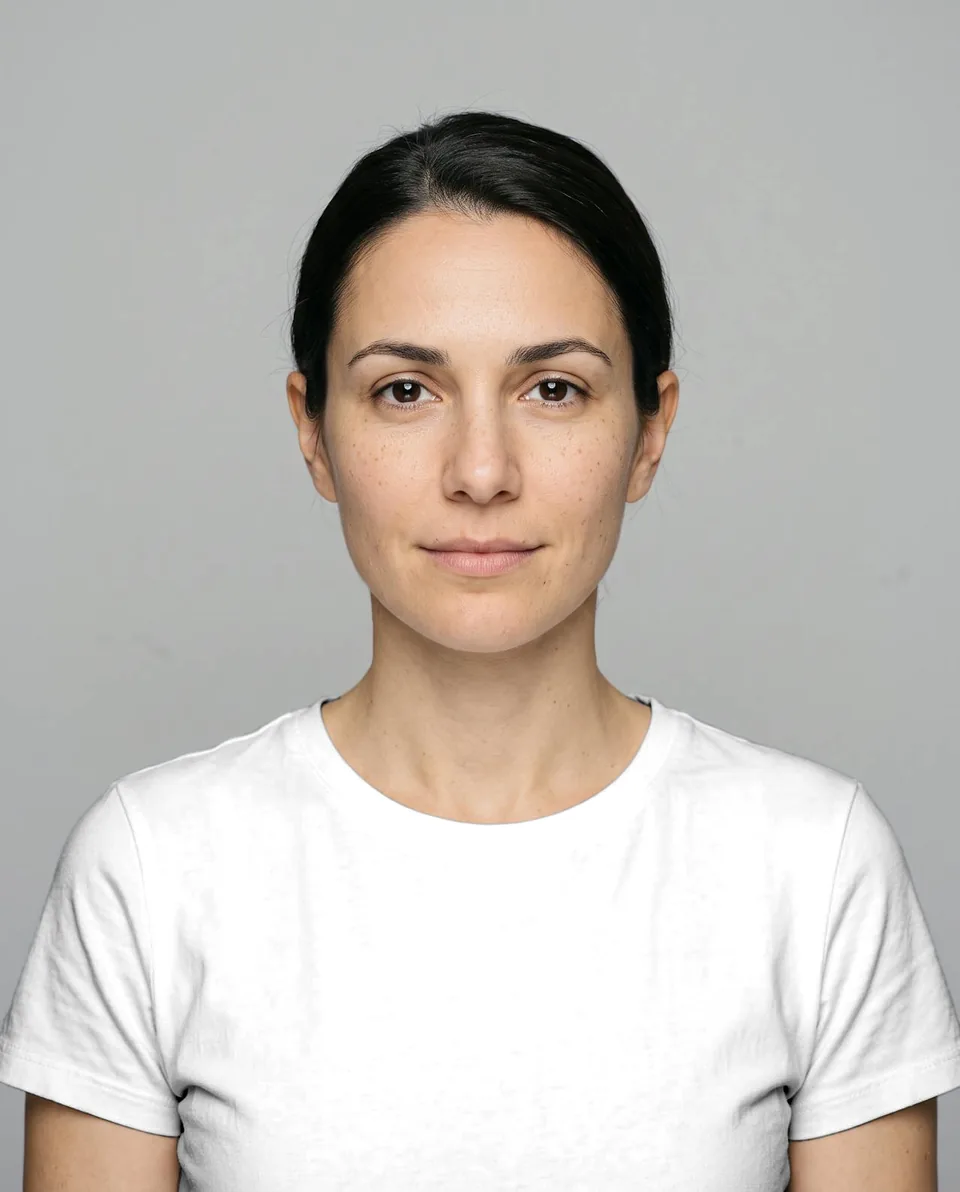
- A bare face: no foundation, no blush, no tinted cream.
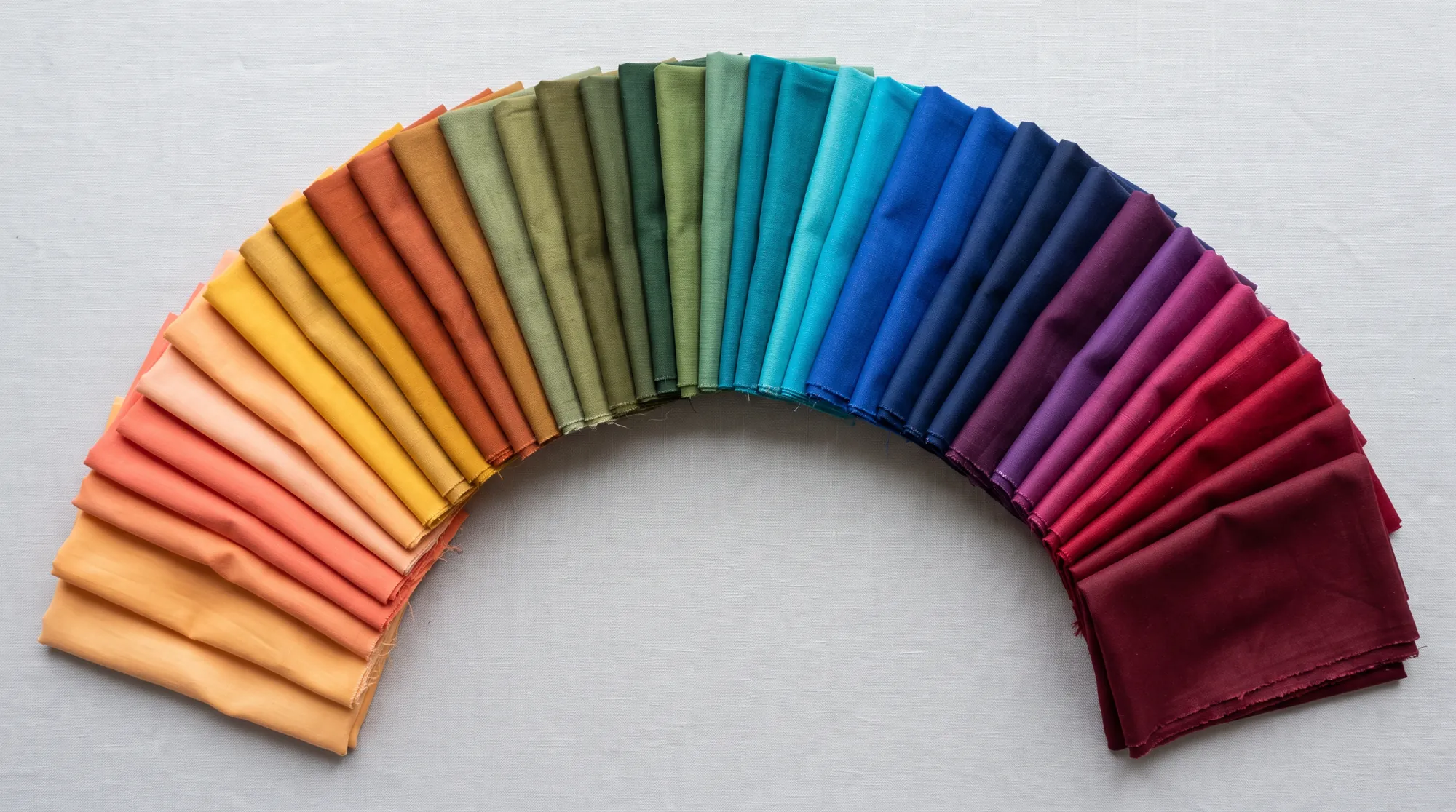
- Six to ten pieces of clothing or fabric in clearly different colors.
Light matters more than anything else. Warm indoor bulbs make everyone look warmer, and a cloudy evening makes everyone look grey. If you can only test in the evening, wait for the next day.
Step 1: the white test
Start with a pure, bright white and an off white or cream. Hold each under your face for a few seconds, then switch.
- If pure white makes you look fresh and cream makes you look sallow, you probably lean cool.
- If cream looks softer and pure white looks harsh, you probably lean warm.
Do not decide yet. This is only the first clue.
Step 2: the drape test
This is what consultants do, with the clothes you already own. Hold each piece under your chin so it covers your neckline, and look at your face, not at the color.
Signs a color works:
- Your skin looks even and smooth.
- The shadows under your eyes look lighter.
- Your eyes look clearer.
Signs a color does not work:
- Redness around the nose and chin stands out.
- Your skin looks grey, yellow or tired.
- You notice the color before you notice your face.
Compare in pairs: a warm red against a cool berry, olive against emerald, camel against grey. Pairs make the difference easier to see than single colors.
Step 3: depth and clarity
Once you have an idea of warm or cool, test the other two questions.
Depth. Compare a light color with a deep version of the same hue, for example light blue against navy. If the deep one makes your face look sharper, you lean deep; if it overpowers you, you lean light.
Clarity. Compare a clear, saturated color with a dusty, greyed one, for example bright turquoise against a muted teal. If the muted one looks calmer on you, you lean soft; if it makes you look dull, you lean bright.
With warmth, depth and clarity together you can place yourself in one of the 12 color seasons.
Two tests you can skip
The vein test. Blue veins are supposed to mean cool and green veins warm. Veins look blue or green mainly because of how light passes through skin, and almost everyone sees a mix. It is not a reliable signal.
The gold or silver jewelry test. It says more about your taste and your hair than about your skin. Use it, at most, as a final hint.
Why home tests are hard
The drape test works, but it has two weak points. Your own eyes adapt to light within seconds, so comparisons drift. And it is hard to judge yourself honestly: most people see the color they like rather than the color that suits them. Even professional consultants sometimes disagree about the same person.
A friend helps. So does a camera, because a photo does not adapt to the light.
Measuring instead of guessing
The Nitido app turns the home test into a measurement. You take a selfie at a window, and the app:
- Checks the light and takes three shots, keeping what repeats.
- Uses the whites of your eyes as a white reference, so the color of the room light is corrected.
- Measures skin and eyes in CIE Lab, a color space where distances match what the eye sees.
- Compares the result with all twelve types and gives you your palette of thirty colors plus six to avoid.
The selfie is analyzed on your phone and never uploaded. Afterward you can hold all thirty colors under your own face in the Fitting Room, which is the drape test without the pile of clothes.
FAQ
Can I do color analysis on myself?
Yes. The drape test in daylight works at home. It is easier with a second person or a camera, because your eyes adapt to the light and to the colors you look at.
What is the best light for color analysis?
Indirect daylight from a window, around the middle of the day, with no direct sun on your face. Avoid warm indoor bulbs and colored walls nearby.
Should I wear makeup for a color analysis?
No. Foundation and blush change the color of your skin, which is exactly what you want to see. Test with a bare face.
Is the vein test accurate?
Not really. Most people see a mix of blue and green veins, and the color mainly comes from how light passes through skin. It is not enough to decide your season.
How long does a color analysis at home take?
The white test and drape test take about 20 to 30 minutes with good light. A measurement in the app takes eight seconds once the light is right.